Showing posts with label Wilmington 1898. Show all posts

Thursday, April 05, 2007

NC Senate and House propose apologies for slavery

Following the leads of Virginia and Maryland, Senate Majority Leader Tony Rand on Wednesday filed a bill apologizing for slavery. On Thursday, four members of the House, including our own Verla Insko, followed suit. From today's editorial in the Greensboro News-Record:

Some may contend these statements are empty gestures with no tangible actions or policies behind them. But there's still something to be said for a collective statement of conscience -- an official acknowledgment that this state, as an enduring institution, protected, preserved and profited from a practice that was morally indefensible.

The Senate resolution, introduced by Majority Leader Tony Rand, a Fayetteville Democrat, issues an "apology for the practice of slavery in North Carolina and expresses its profound contrition for the official acts that sanctioned and perpetuated the denial of basic human rights and dignity to fellow humans."

The House resolution uses similar language, formally apologizing "for the injustice, cruelty and brutality of slavery."

However, the House version goes one step further and mentions "the many hardships suffered, past and present, on account of slavery."

North Carolina was not a home to as many plantations as other slaveholding states, but as Rand's bill notes, fully one-third of the state's population, or 330,000 of its residents, were slaves at the time of the Civil War.

Significantly, both the House and Senate resolutions rightly reach beyond the abolition of slavery and cite the harsh and repressive segregationist practices in the decades that followed.

Both bills also specifically mention state laws that barred black people from learning to read or write and that denied black residents the right to vote.


It is true that, as the editorial further says, an apology alone "wouldn't improve race relations or provide new jobs." And it's also true that none of us was alive during those benighted times. But we all live with the consequences. To deny that, and to deny the need to continue to work for racial justice, is to take a pretty narrow view of history.

A couple of weeks ago, Rep. Thomas Wright of Wilmington and others filed a bill to implement the Wilmington 1898 Commission Report: "An act to implement recommendations of the 1898 Wilmington Race Riot Commission by establishing a commission to develop legislation for a restructuring and development authority, provide incentives for business development of areas impacted by the 1898 Wilmington race riot, and to increase minority home ownership in impacted areas."

These are constructive steps to deal honestly and straightforwardly with a racist past that, in the past, had been dealt with in ways that were neither.

Monday, January 22, 2007

NC Democrats apologize for 1898

Via the North Carolina Miscellany: Yesterday the North Carolina Democratic Party formally apologized for the events leading up to and including the 1898 Wilmington "race riot," a move prompted by the publication of the report of the Wilmington Race Riot Commission.

“Sometimes, moving forward requires a sober look at the past. I am pleased that the State Executive Committee considered and unanimously passed this resolution,” said North Carolina Democratic Party Chair Jerry Meek. “The Democratic Party of 2007—and of the last half century—isn’t the same Party that it was in 1898. This resolution is important because it renounces past actions of the Democratic Party and celebrates the Party of today.”


In Wilmington, the resolution is called "a step in the right direction."

wilmington cartoon
From The North Carolina Election of 1898, an exhibit in Wilson Library, UNC.

Friday, November 17, 2006

"The ghosts of 1898"

The report of the 1898 Wilmington Race Riot Commission, produced at the direction of the North Carolina General Assembly, is a milstone in the state's history, as I wrote at the time it was published last December. Following the report, in late May, the Commission submitted to the General Assembly a set of recommended compensatory actions. Among them:

The commission recommended that several newspapers - including the Star-News - which reported on the event as it happened, to work with the North Carolina black press association to prepare a summary of the commission report, study the effects of 1898 and impact of Jim Crow on the state's black press and endow scholarships for black journalists.

The Star-News itself pledged to "work with other state media to address the commission's recommendations."

The special section published today jointly by the Raleigh News & Observer and the Charlotte Observer, and included in today's Wilmington Star-News, responds to this recommendation by bringing the highlights of the report to a broad audience. Wisely, the two papers chose Tim Tyson to write the narrative--not only because he's a great writer and ideally qualified, but also because, as editor Melanie Sill points out, the Raleigh and Charlotte papers were active participants in this sorry history.

UPDATE 11/19: Today's N&O includes interviews with four descendants of players in the event, two white and two black: George Rountree III, Anne Russell, Lewin Manly, and Faye Chaplin. These are important contributions to the story.

Tuesday, July 11, 2006

The disappearing art of the book

So I wanted a hard copy of the Wilmington Report. Sure it's online, but I wanted the thing itself. Getting one was easy enough through my state senator's office. But what a disappointment. It's photocopy paper with a spiral binding. Surely the state of North Carolina could have done better. I wasn't expecting a fancy hard cover, but a nice paperback, you know, with the state seal or something on it, would not have been a stretch. Is a real print edition planned? I haven't heard that it is.

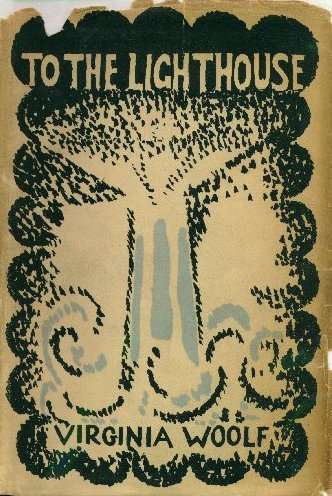
Beautiful books have been made. Vanessa Bell designed covers for her sister.

lighthouse

Smith College has a collection of elegant book bindings.

poetry of life

Those were different times.

Many online resources on bookbinding.

Saturday, July 08, 2006

Not so set in stone

LeRae Umfleet, principal researcher for the report of the 1898 Wilmington Race Riot Commission, was guest this morning on WNCU's "Legal Eagle" show with Irving Joyner. She noted that the public monuments scattered around the city in honor of the leaders of the Confederacy were erected in direct response to that event, the only overthrow of a duly elected government in our country's history.


George Davis, attorney general of the Confederacy, statue by Francis H. Packer, Wilmington, 1911

Indeed the memorials in Wilmington as well as in Raleigh, as Catherine Bishir has observed, played a crucial role in solidifying the history of the post-Reconstruction period. The lesson that 20th century schoolchildren would learn, punctuated by these towering monuments, was that a fearful threat of "Negro domination" had been put down--with violence to be sure, and that was unfortunate--so that white rule could be restored and the proper order of things reinstated. “With competing visions of the state’s past, present, and future all but silenced in official discourse, [North Carolina’s] leaders shared a powerful sense that both in politics and in the culture at large, matters had been returned to their correct alignment,” Bishir writes in Fitz Brundage's collection Where These Memories Grow. The state’s history was reinterpreted as a tapestry of “old family heritage, Anglo-Saxon supremacy, and military and political heroism,” all with an aim toward a “rebirth of southern progress and leadership in the nation.”


Thomas Ruffin, statue by Francis H. Packer, Raleigh (Court of Appeals Building), 1915

Judge Thomas Ruffin's statue is one of several monuments in Raleigh that came out of this historical moment of renewed pride and reflection. In dedicating the statue, J. Crawfurd Biggs, president of the North Carolina Bar Association, spoke for the state's ruling class when he emphasized the importance of placing the likenesses of great historical figures on public display:

We have not exerted ourselves to stimulate a healthy State pride, by preserving in marble and bronze the records of the past, by erecting statues and suitable memorials to commemorate the name and fame of the great men whose services have enriched and glorified the traditions of our Commonwealth. It is from the experience of the past that we draw inspiration for the future, and any act which emblazons in imperishable form the great deeds of our ancestors should be regarded with favor.


Across the country in this period, "Public monuments helped to celebrate and cement [a] progressive narrative of national history," writes Kirk Savage--a narrative that "instill[ed] a sense of historical closure. Memorials to heroes and events were not meant to revive old struggles and debates but to put them to rest—to show how great men and their deeds had made the nation better and stronger. Commemoration was a process of condensing the moral lessons of history and fixing them in place for all time; this required that the object of commemoration be understood as a completed stage of history, safely nestled in a sealed-off past."

But"[t]his logic of commemoration drastically shriveled history," Savage continues. "Women, nonwhites, laborers, and others who did not advance the master narrative of progress defined by a white male elite had little place in the commemorative scheme, except perhaps as the occasional foil by which heroism could be better displayed. This kind of commemoration sought to purify the past of any continuing conflict that might disturb the carefully crafted national narrative."

The success of just such "purification" of the past is what makes the Wilmington report so important for North Carolinians. Close to 500 pages in hard copy, it documents in fact after stubborn fact how "[e]very facet of African American life was affected by the events of 1898" (248). With other recent efforts to come to terms with Reconstruction--Thomas C. Holt's 2004 speech at UNC comes to mind--the work of LeRae Umfleet and the Wilmington Race Riot Commission un-fixes the past in productive ways. For as Savage puts it, "The history of monuments themselves is no more closed than the history they commemorate."