According to the Boston Globe, Meredith College in Raleigh is one of the venues vying for all or part of the Somerville Gates.
(Via Kottke.)
Sunday, February 27, 2005

Historic Watergate

This past week, the Watergate entered history as a modernist landmark, in a move that saved it from a dramatic redesign/redevelopment.
The scale and mixed-use program of Watergate required the formation of Washington's first private-initiative Planned Unit Development, a new and largely untested idea in urban planning. The building is a master work of prominent European Modernist Luigi Moretti, one of the most important twentieth-century Italian architects, and represents the only example of the architect's work in the United States. . . .
Furthermore, execution of the complex, curvilinear design exhibited at Watergate precipitated the use of a computer to efficiently calculate measurements of building elements, making Watergate one of the earliest known examples of computer-aided design in the country.
Evidently the D.C. Historic Preservation Review Board was comfortable making this designation even though it lacked one crucial piece of historical information: the identity of Deep Throat.
Saturday, February 26, 2005
Ending homelessness
Here are two stories about yesterday's announcement by Orange and Durham Counties of a commitment to end chronic homelessness in 10 years.

Craig Chancellor, Triangle United Way; Sen. Ellie Kinnaird; Philip Mangano, U.S. Interagency Council on Homelessness; Martha Are, N.C. Interagency Council for Coordinating Homelessness Programs.

Orange County Commissioner Moses Carey; Philip Mangano; Durham Mayor Bill Bell; Chapel Hill Mayor Kevin Foy; Durham Mayor Pro Tem Cora Cole-McFadden; Craig Chancellor.
Philip Mangano, head of the federal homelessness initiative, is an impressive voice for the voiceless. (I didn't take notes, but here's a representative stump speech.) For twenty years, he said, the community response to homelessness has been to manage it, to contain (or hide) people as best it could be done, with the hope that the problem would go away. But something has changed:
That's right, he's an abolitionist, and he embraces the obvious comparison.
Billie Guthrie, chair of the Orange County Community Initiative to End Homelessness, reported the results of the annual homeless count just conducted.
We have our work cut out for us. There's reason to be skeptical, with the Bush administration slashing one useful program after another (Section 8 housing vouchers for example). But there are also real reasons for hope.
Craig Chancellor, Triangle United Way; Sen. Ellie Kinnaird; Philip Mangano, U.S. Interagency Council on Homelessness; Martha Are, N.C. Interagency Council for Coordinating Homelessness Programs.
Orange County Commissioner Moses Carey; Philip Mangano; Durham Mayor Bill Bell; Chapel Hill Mayor Kevin Foy; Durham Mayor Pro Tem Cora Cole-McFadden; Craig Chancellor.
Philip Mangano, head of the federal homelessness initiative, is an impressive voice for the voiceless. (I didn't take notes, but here's a representative stump speech.) For twenty years, he said, the community response to homelessness has been to manage it, to contain (or hide) people as best it could be done, with the hope that the problem would go away. But something has changed:
We're no longer satisfied with managing the problem, maintenancing the effort, or accommodating the response. We have a new standard. Abolishing homelessness.
That's right, he's an abolitionist, and he embraces the obvious comparison.
Billie Guthrie, chair of the Orange County Community Initiative to End Homelessness, reported the results of the annual homeless count just conducted.
Total Number of Homeless People Counted in January 2005: 230
Homeless people in families: 59
--Homeless families with children are among the fastest growing segments of the homeless population. Indeed, in one year in Orange County, there has been a 40% growth in this population.
Homeless individuals: 171
Homeless children: 38
--Represents 16.5% of our total population.
Homeless people with a history of domestic violence: 48
--Battered women who live in poverty are often forced to choose between abusive relationships and homelessness. This population represents 21% of our total homeless population.
Chronically homeless people: 70
--Most startling and most telling statistic is that the chronic homeless now represent 30% of our total population, well above the national average of 10%. These folks are disabled individuals who remain continuously homeless or constantly cycling in and out of homelessness. Research shows they are also very hard to serve and consume a disproportionately large amount of costly community resources (i.e. emergency shelter resources, police and EMS resources and hospital visits).
We have our work cut out for us. There's reason to be skeptical, with the Bush administration slashing one useful program after another (Section 8 housing vouchers for example). But there are also real reasons for hope.
Friday, February 25, 2005
Labors lost (liminal thoughts)
The 20th century is over. Y2K hysteria is a distant memory; whether the century ended on Dec. 31, 1999, or a year later is irrelevant. Besides, as surely as history tells us that the 16th century ended with the death of Queen Elizabeth in 1603, and that the 19th century ended with the death of Queen Victoria in 1901,
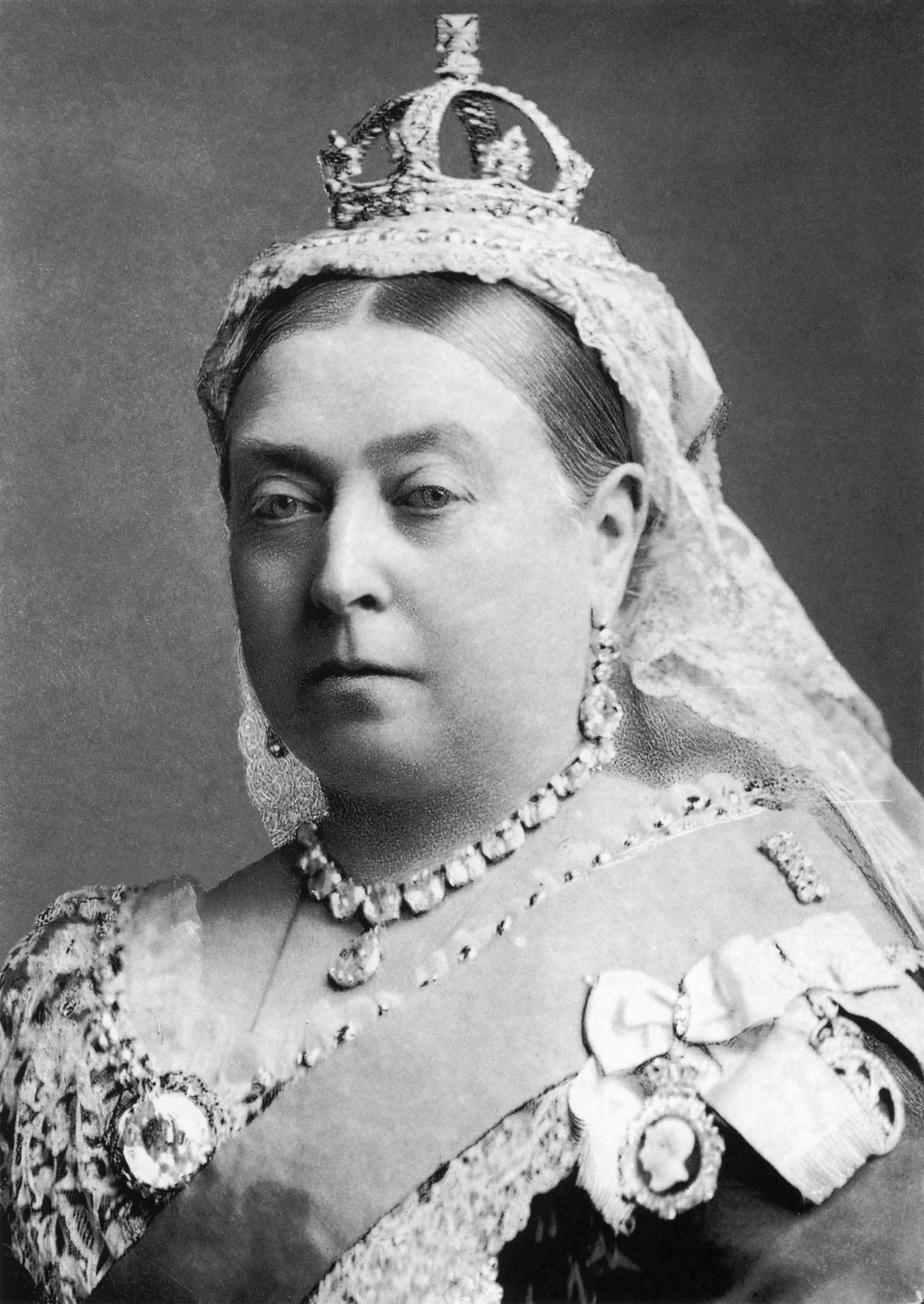
we know that the 20th century ended with the deaths of thousands on September 11, 2001.
The first book that I've read that looks upon the 20th century steadily and whole, as a completed whole, is Passed On, Karla Holloway's fascinating investigation of African American mourning rituals. This book is worth reading for lots of reasons, but what interests me here is that simple fact. For it was, frankly, a little unnerving, accurate though it was: the 20th century as told in the past tense.
If you have any doubt that the 20th century is over, LostLabor, a collection of photos of American factory workers 1900-1980, will set you straight.

I'm showing my age, I know. Virginia Woolf was born in 1882. She and her sister Vanessa delighted in leaving the 19th century behind. They were children of the new century! But I'm in a mid-century cohort--old enough to remember when the next turn of the century was unimaginably far off. I'm betwixt and between, wandering between two worlds. And unlike Paul, I'm not immune from Social Security "reform."
Children born in 1982 and after--the "millennial generation," they've been called--are already catching the vibes of the new century: they learn differently, they're "more hands-on, more experiential (and) more comfortable working in teams." Our child of the 1990s fits the description. I want to think it's a hopeful picture.
we know that the 20th century ended with the deaths of thousands on September 11, 2001.
The first book that I've read that looks upon the 20th century steadily and whole, as a completed whole, is Passed On, Karla Holloway's fascinating investigation of African American mourning rituals. This book is worth reading for lots of reasons, but what interests me here is that simple fact. For it was, frankly, a little unnerving, accurate though it was: the 20th century as told in the past tense.
If you have any doubt that the 20th century is over, LostLabor, a collection of photos of American factory workers 1900-1980, will set you straight.
I'm showing my age, I know. Virginia Woolf was born in 1882. She and her sister Vanessa delighted in leaving the 19th century behind. They were children of the new century! But I'm in a mid-century cohort--old enough to remember when the next turn of the century was unimaginably far off. I'm betwixt and between, wandering between two worlds. And unlike Paul, I'm not immune from Social Security "reform."
Children born in 1982 and after--the "millennial generation," they've been called--are already catching the vibes of the new century: they learn differently, they're "more hands-on, more experiential (and) more comfortable working in teams." Our child of the 1990s fits the description. I want to think it's a hopeful picture.
Thursday, February 24, 2005
Homelessness initiative in Orange County
Tomorrow morning I'll be taking part in a joint press conference to announce the launch of a 10-year program to end chronic homelessness in Orange County. The announcement will take place at Project Homestart, the Inter-Faith Council's shelter for women and children.
Philip Mangano, executive director of the Interagency Council on Homelessness, will be with us to talk about how what we are about to do fits within state and national contexts.
In many ways, the thought of ending homelessness in these Dickensian times sounds like a pipe dream. But maybe it isn't. Architect Sam Davis shows that people elsewhere are making progress in ways we can learn from. They're doing it through broad, creative approaches that go far beyond emergency bed and board--for example Dome Village in L.A.
A Chapel Hill resident who has been homeless in his time tells me how important it is to have access to tools and a secure place to store them. I suspect there are lots of ideas like this that we should hear as we ponder the whole continuum of care.
Philip Mangano, executive director of the Interagency Council on Homelessness, will be with us to talk about how what we are about to do fits within state and national contexts.
In many ways, the thought of ending homelessness in these Dickensian times sounds like a pipe dream. But maybe it isn't. Architect Sam Davis shows that people elsewhere are making progress in ways we can learn from. They're doing it through broad, creative approaches that go far beyond emergency bed and board--for example Dome Village in L.A.
A Chapel Hill resident who has been homeless in his time tells me how important it is to have access to tools and a secure place to store them. I suspect there are lots of ideas like this that we should hear as we ponder the whole continuum of care.
Duke conference on internet and agency decisionmaking
Blogger-law professor Michael Froomkin will be up from Florida tomorrow for the Duke Law Journal Thirty-Fifth Annual Administrative Law Conference, along with others including Zephyr Teachout (a former editor-in-chief of the Duke Law Journal).
The goal of this conference will be to examine, from empirical, legal, and practical perspectives, the effect of the Internet on agency decisionmaking. Specifically, the conference will consider the following questions:
- Is this another area in which the influence of the Internet has been overhyped?
- Does the rise of the Internet pose new challenges and opportunities to public agencies?
- Can the Internet help solve the collective action problem?
- Do e-mail campaigns reflect true grassroots activism?
Wednesday, February 23, 2005
Royalty
The news of Prince Charles' betrothal to Camilla Parker Bowles ("transformed" of late "from dowdy, outdoorsy aristocrat to classy royal consort") has put me in mind of an essay by Virginia Woolf.
Royalty to begin with, merely as an experiment in the breeding of human nature, is of great psychological interest. For centuries a certain family has been segregated; bred with a care only lavished upon race-horses; splendidly housed, clothed, and fed; abnormally stimulated in some ways, suppressed in others; worshipped, stared at, and kept shut up, as lions and tigers are kept, in a beautiful brightly lit room behind bars. The psychological effect upon them must be profound; and the effect upon us is as remarkable. Sane men and women as we are, we cannot rid ourselves of the superstition that there is something miraculous about these people shut up in their cage. Common sense may deny it; but take common sense for a walk through the streets of London on the Duke of Kent's wedding-day. Not only will he find himself in a minority, but as the gold coach passes and the bride bows, his hand will rise to his head; off will come his hat, or on the contrary it will be rammed firmly on his head. In either case he will recognize the divinity of royalty.
Tuesday, February 22, 2005
The opposite of homed
As I remarked last fall at our homelessness roundtable (quoting authorities better versed in it all than I), to call someone "homeless" is distinctive and telling. To be homeless is to be defined by a lack, the lack of a home. In prior times the same person might have been called a bum, a drifter, a tramp, a vagabond. (Carl Sandburg was once, by his own account, a hobo.) Perhaps these terms became disreputable on their own terms, and so all that was left was a negative identity. We don't know what to call them, but we know what they are not, what crucial thing they do not have: a home. No fixed address.
If you have no address, where do get your mail? Will your letter to the editor be published? (The one time I had a letter published in the Washington Post, they called me at home to verify that I was for real.) If you live out of a van, where can you send your child to school? Where can you register to vote? (If you are interested.) Without firm grounding, what position of authority can you claim?
Having your own household is the beginning of autonomy--this was Aristotle's belief, and it became worked out in English common law. The private sphere, the enjoyment of the privacy of your own home, was a positive asset: the home as refuge from the regulated public sphere, from the authority of the sovereign. It is one half of Shakespeare's "local habitation and a name."
Home is a powerful metaphor. Bring your point home. You're home free. And of course, your home page.
The Homeless Guy has a home page. I understand he makes good use of the Nashville Public Library. Is he unusual? He is unusually articulate, but he may not be that unusual. He's a man without a home, for particular reasons, and he would be happer if he had one (an apartment would do).
In the same way that no one knows you're a dog, on the internet no one has to know you are homeless. You can look for work. You can offer to do work. There is much potential here it seems.
So I asked in the Chapel Hill Public Library about their policy on offering internet services to persons with no fixed address. The woman at the reference desk was not exactly sure. She found out that in order to register to use the internet--and you do have to give information about yourself--you do not have to give an address, not even the address of the homeless shelter. But if you want to check out a book, ah, that is a different question.
If you have no address, where do get your mail? Will your letter to the editor be published? (The one time I had a letter published in the Washington Post, they called me at home to verify that I was for real.) If you live out of a van, where can you send your child to school? Where can you register to vote? (If you are interested.) Without firm grounding, what position of authority can you claim?
Having your own household is the beginning of autonomy--this was Aristotle's belief, and it became worked out in English common law. The private sphere, the enjoyment of the privacy of your own home, was a positive asset: the home as refuge from the regulated public sphere, from the authority of the sovereign. It is one half of Shakespeare's "local habitation and a name."
Home is a powerful metaphor. Bring your point home. You're home free. And of course, your home page.
The Homeless Guy has a home page. I understand he makes good use of the Nashville Public Library. Is he unusual? He is unusually articulate, but he may not be that unusual. He's a man without a home, for particular reasons, and he would be happer if he had one (an apartment would do).
In the same way that no one knows you're a dog, on the internet no one has to know you are homeless. You can look for work. You can offer to do work. There is much potential here it seems.
So I asked in the Chapel Hill Public Library about their policy on offering internet services to persons with no fixed address. The woman at the reference desk was not exactly sure. She found out that in order to register to use the internet--and you do have to give information about yourself--you do not have to give an address, not even the address of the homeless shelter. But if you want to check out a book, ah, that is a different question.
Monday, February 21, 2005
The Oranging of America
The clock is ticking on The Gates, but there's still time for The Somerville Gates (via Ed Cone) and The Crackers (via Majikthise).
Pace Max Apple.
Pace Max Apple.
Just beautiful
From Gilead, a novel:
In writing this, I notice the care it costs me not to use certain words more than I ought to. I am thinking about the word "just." I almost wish I could have written that the sun just shone and the tree just glistened, and the water just poured out of it and the girl just laughed--when it's used that way it does indicate a stress on the word that follows it, and also a particular pitch of the voice. People talk that way when they want to call attention to a thing existing in excess of itself, so to speak, a sort of purity or lavishness, at any rate something ordinary in kind but exceptional in degree. So it seems to me at the moment. There is something real signified by that word "just" that proper language won't acknowledge. It's a little like the German ge-. I regret that I must deprive myself of it. It takes half the point out of telling the story.
And now having finished this lovely meditative novel, I note that toward the end, the narrator does use the intensifier "just" on a couple of occasions, just lets himself go I suppose. It made me smile. There've been lots of reviews of the book, none better than the one at The Revealer.
In writing this, I notice the care it costs me not to use certain words more than I ought to. I am thinking about the word "just." I almost wish I could have written that the sun just shone and the tree just glistened, and the water just poured out of it and the girl just laughed--when it's used that way it does indicate a stress on the word that follows it, and also a particular pitch of the voice. People talk that way when they want to call attention to a thing existing in excess of itself, so to speak, a sort of purity or lavishness, at any rate something ordinary in kind but exceptional in degree. So it seems to me at the moment. There is something real signified by that word "just" that proper language won't acknowledge. It's a little like the German ge-. I regret that I must deprive myself of it. It takes half the point out of telling the story.
And now having finished this lovely meditative novel, I note that toward the end, the narrator does use the intensifier "just" on a couple of occasions, just lets himself go I suppose. It made me smile. There've been lots of reviews of the book, none better than the one at The Revealer.
Princeville: back from the brink
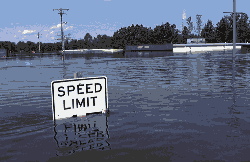
Princeville, N.C., Sept. 1999 (U.S. Army)
After the destruction of Hurricane Floyd in 1999, residents of Princeville did a courageous thing: they refused a federal buyout. Then they worked hard to make sure it was the right decision.

Princeville Town Hall
The bet paid off. A thriving Princeville celebrated its 120th anniversary on Feb. 17. Jonathan Tilove, a Newhouse reporter about whom I've written before, came down and wrote a really nice story about it:
In September 1999, Hurricane Floyd brought what they call the Great Flood to this poor little town along the banks of the Tar River. For 10 days Princeville, the nation's first town chartered by blacks, was under water. Even the ancestors, it seemed, were bailing out--161 caskets dislodged from their final resting place were floating in eerie eddies.
More . . .
Sunday, February 20, 2005
Altitude with attitude
Asheville is full of stories like this:
The transformative concentration of vortices and power spots around Asheville--"beneficial earth energies," all--has been noted.
Comes now documentary proof. Interviewed in The Guardian about a recent film about him, Robert Moog, who lives in Asheville, offers a theory of conscious energy shared between man and machine:
Skeptical? See for yourself.
I met an attractive woman at a Unity Sunday service, an active participant in the new community who moved here a few years ago. She, like many others I have chatted with over the past four years gave a story: "Everywhere I looked, I saw something about Asheville. Word on the 'metaphysical street' hinted that Asheville was fast becoming the new spiritual Mecca," she shared.
The transformative concentration of vortices and power spots around Asheville--"beneficial earth energies," all--has been noted.
Comes now documentary proof. Interviewed in The Guardian about a recent film about him, Robert Moog, who lives in Asheville, offers a theory of conscious energy shared between man and machine:
.
On the telephone from North Carolina, Moog struggles to put into words how he feels he has an organic connection with the circuitry [of his musical instruments], rather like a violinst has with wood. Then the dam bursts.
"Look, my wife is a retired philosophy lecturer, and she says that the notion that machinery doesn't have consciousness is a crock of shit. Everything has some consciousness, and we tap into that. It's about that energy at its most basic level.
There are confirmed stories of people who can break instruments and cause them to fail by walking in a room. I'm the opposite--I can walk into a room and something will work better than it is supposed to.
Skeptical? See for yourself.
Saturday, February 19, 2005
raleighpolitics.anonymouscowards.org
The News & Observer reports today on a self-identified progressive political blog in Raleigh . . . whose authors use pseudonyms. C'mon out, y'all, it can't be that bad.
A type for everyone
My great-grandfather was a 19th c. newspaperman who set his own type by hand. Well into my childhood (till the offset revolution of the 1960s), The Gilmer Mirror was set in hot type from Linotype machines (which my mother wanted to learn how to operate, but her parents forbade).

All my life I've been fascinated with typefaces. It delights and amazes me that new ones are invented all the time.
All my life I've been fascinated with typefaces. It delights and amazes me that new ones are invented all the time.
Tobacco through the ages
Interesting and musical blogger "Melinama," who I "met" from across the room at the Triangle Bloggers Conference, reflects diachronically on a recent trip down east.
Friday, February 18, 2005
Fundamental revisionism
Wish I'd been in Buffalo today to hear Paul Finkelman, a legal scholar I'm more used to hearing from on the slavery law listserv, on the Ten Commandments cases. He was an expert witness in case against Judge Roy Moore.
The case against Moore's massive monument was easy. As a lower court judge he kept a wooden plaque of the Ten Commandments at his bench and routinely invited prayer sessions. He ran for Alabama Supreme Court on a platform "to restore the moral foundation of law." Once elected, he installed in the rotunda of the court building, under cover of darkness, a 5,280 pound granite Decalogue. The installation was filmed by an evangelical group in anticipation of using funds from the film to underwrite Moore's legal bills. At the public unveiling, the judge made a grand speech about the moral foundation of law. "In closing, he told the audience that they would 'find no documents surrounding the Ten Commandments because they stand alone as an acknowledgment of that God that's contained in our pledge, contained in our motto, and contained in our oath.'" (Glassroth v. Moore, 11th Cir. 2003.) And it's precisely there that his case came apart--as if it hadn't already.
In what must have been someone's attempt to lend him a semblance of legality, he was asked if he'd allow two companion displays: one Dr. King's "I Have a Dream" speech and the other an atheist group's display of a symbol of atheism. He said no to both. He eventually did concede to a line from Dr. King's "Letter from a Birmingham Jail" regarding God's moral laws and a God-approving quote from Frederick Douglass. But he still lost, and the Supreme Court refused to hear the appeal.
The two cases coming before the Court in a couple of weeks are not quite so blatant. McCreary County v. ACLU of Kentucky is an appeal of a 6th Cir. decision finding that displays of the Ten Commandments in two county courthouses and a public school were unconstitutional. Van Orden v. Texas is an appeal from a 5th Cir. opinion declaring it constitutional for a stone Decalogue to stand, with various other monuments, on the grounds of the Texas Capitol.
The Commandment-backers in these cases try to say that the display is simply a part of a secular historical context (a claim that drives Baptists into the arms of atheists). No matter how hard they try, though, they can't construct an accurate history that puts their document at the center of the American story. In the Kentucky case, they tried very hard--even reminding the court that Ronald Reagan declared 1983 "The Year of the Bible." But "[t]he fact that the Ten Commandments appear in a historical governmental publication, such as the Congressional Record," the 6th Circuit Court said, "does not 'secularize' the Ten Commandments."
Finkelman and other legal historians make these points in an amicus brief (.pdf). "[T]here is no historical basis for singling out the Ten Commandments as seminal in the foundation of American law," they write.
The case against Moore's massive monument was easy. As a lower court judge he kept a wooden plaque of the Ten Commandments at his bench and routinely invited prayer sessions. He ran for Alabama Supreme Court on a platform "to restore the moral foundation of law." Once elected, he installed in the rotunda of the court building, under cover of darkness, a 5,280 pound granite Decalogue. The installation was filmed by an evangelical group in anticipation of using funds from the film to underwrite Moore's legal bills. At the public unveiling, the judge made a grand speech about the moral foundation of law. "In closing, he told the audience that they would 'find no documents surrounding the Ten Commandments because they stand alone as an acknowledgment of that God that's contained in our pledge, contained in our motto, and contained in our oath.'" (Glassroth v. Moore, 11th Cir. 2003.) And it's precisely there that his case came apart--as if it hadn't already.
In what must have been someone's attempt to lend him a semblance of legality, he was asked if he'd allow two companion displays: one Dr. King's "I Have a Dream" speech and the other an atheist group's display of a symbol of atheism. He said no to both. He eventually did concede to a line from Dr. King's "Letter from a Birmingham Jail" regarding God's moral laws and a God-approving quote from Frederick Douglass. But he still lost, and the Supreme Court refused to hear the appeal.
The two cases coming before the Court in a couple of weeks are not quite so blatant. McCreary County v. ACLU of Kentucky is an appeal of a 6th Cir. decision finding that displays of the Ten Commandments in two county courthouses and a public school were unconstitutional. Van Orden v. Texas is an appeal from a 5th Cir. opinion declaring it constitutional for a stone Decalogue to stand, with various other monuments, on the grounds of the Texas Capitol.
The Commandment-backers in these cases try to say that the display is simply a part of a secular historical context (a claim that drives Baptists into the arms of atheists). No matter how hard they try, though, they can't construct an accurate history that puts their document at the center of the American story. In the Kentucky case, they tried very hard--even reminding the court that Ronald Reagan declared 1983 "The Year of the Bible." But "[t]he fact that the Ten Commandments appear in a historical governmental publication, such as the Congressional Record," the 6th Circuit Court said, "does not 'secularize' the Ten Commandments."
To be sure, "the fact that the Founding Fathers believed devotedly that there was a God and that the unalienable rights of man were rooted in Him is clearly evidenced in their writings, from the Mayflower Compact to the Constitution itself." . . . There is by no means a consensus, however, that the source of Thomas Jefferson's belief in divinely-bestowed, unalienable rights, to the extent this belief inspired the writing of the Declaration, was the Ten Commandments or even the Bible. . . .
Although this Court has neither the ability nor the authority to determine the "correct" view of American history, it is our role to recognize that (a) Defendants' displays provided the viewer with no analytical or historical connection between the Ten Commandments and the other historical documents; and (b) Defendants have made no attempt in this litigation to support the displays' historical assertions with relevant and credible evidence.
Finkelman and other legal historians make these points in an amicus brief (.pdf). "[T]here is no historical basis for singling out the Ten Commandments as seminal in the foundation of American law," they write.
Moonscape

Jeff Pomerantz tells how this picture of Titan, taken by the Huygens space probe, came to be--and what it has to do with the new media revolution.
Thursday, February 17, 2005
Blogging homelessness
Thanks to Terri for pointing out the column in today's Daily Tar Heel on an up-close encounter with a few homeless people. "It was the best lunch I had ever had with people I had never met before," writes Lauren Craig. Once again a real encounter demolishes a stereotype.
There's a thriving blogger community in Nashville (Greensboro envy). Among them is a homeless guy.
There's a thriving blogger community in Nashville (Greensboro envy). Among them is a homeless guy.
Censored
Maybe it's happened to you too. You're surfing the net and without warning they find you: pictures of bodies blown to pieces, arms and legs in pools of blood, unrecognizable heaps on the asphalt. Images of war. And yet we are not even supposed to see the caskets coming home.
"What role should patriotism play in war reporting?" "None," says Walter Cronkite.
"What role should patriotism play in war reporting?" "None," says Walter Cronkite.
Wednesday, February 16, 2005
But I thought Google owned Blogger
Via Majikthise: A change in the algorithm? "Google apparently updated its database and moved blogs way, way down the list of search results." I googled myself--for research purposes only--and sure enough, my blog, which used to come up second or third, is nowhere near.
Like it is
Tim Tyson strikes again. In a follow-up to his earlier interview with Melinda Penkava on The State of Things about Blood Done Sign My Name, he was on again yesterday. He has more to say about civil rights history--in memory and reality.
Nonviolence was an important moral witness, but what sitting at the lunch counter has in common with burning a warehouse is that both of them are a form of coercion that says you're not going to make any money until you deal with us. Until you make us full citizens, we will not have business as usual. And that is a form of politics and coercion. And it's not just about calling upon the conscience of the person who owns the lunch counter, who wants to eat at it, but it is a matter of compelling them to negotiate with you. Martin Luther King said a riot is the language of the unheard. If you won't hear the sit-in, then things will start catching on fire. And that's always been true, and it's true all over the world, and I think we tell ourselves a kind of happy story about that because we'd like to pretend that we were better than we were.
. . .
It's just politics as it happens on planet Earth. . . . I am not an advocate of violence, OK? But nonetheless, politics is not about a moral appeal. Politics is about power. And the civil rights movement was a political movement.
Tyson is giving a lecture tomorrow at 5 p.m. at the National Humanities Center. It's called "Miss Amy's Witness: Why the History of the Civil Rights Movement is (Mostly) Wrong."
Nonviolence was an important moral witness, but what sitting at the lunch counter has in common with burning a warehouse is that both of them are a form of coercion that says you're not going to make any money until you deal with us. Until you make us full citizens, we will not have business as usual. And that is a form of politics and coercion. And it's not just about calling upon the conscience of the person who owns the lunch counter, who wants to eat at it, but it is a matter of compelling them to negotiate with you. Martin Luther King said a riot is the language of the unheard. If you won't hear the sit-in, then things will start catching on fire. And that's always been true, and it's true all over the world, and I think we tell ourselves a kind of happy story about that because we'd like to pretend that we were better than we were.
. . .
It's just politics as it happens on planet Earth. . . . I am not an advocate of violence, OK? But nonetheless, politics is not about a moral appeal. Politics is about power. And the civil rights movement was a political movement.
Tyson is giving a lecture tomorrow at 5 p.m. at the National Humanities Center. It's called "Miss Amy's Witness: Why the History of the Civil Rights Movement is (Mostly) Wrong."
Sea of names, beautiful names
Ruby blogs about Baby Name Wizard's NameVoyager, the java application that shows you interactively when your name (or anybody's) peaked and waned in the last 100 years. I'd been thinking about blogging it but it wasn't working for me (in Firefox). Then I got a clue (tried Netscape). It's cool. It'll also show you a kind of psychedelic bar graph of the relative popularity of all names, male and female, across the century. Well, it looks like a sand painting. "Mary" has a huge swath, being no. 1 for girls for about half a century.
It's fun to think up "case studies"--try "Tammy" and think "Tammy's in Love." Try "Jennifer" and think "Love Story." An entry on a blog connected to this site suggests others (like the fall of German names around 1940). Another entry predicts future hits!
Baby Name Wizard is associated with a book of the same name, yet another baby name book. Such a big thing to name a baby--expectant parents need all the help they can get. One writes, "We want a name like Caroline, but not exactly Caroline, you know?" I think I might know. I have a theory about what makes a word beautiful.* (Why girl's names need to be beautiful is a whole different question.) The theory is that words that have an alternating sequence of "sonorants" (the four consonants that are singable, hummable: l, r, m, n) are considered beautiful by English speakers.
Examples? "Maria" from "West Side Story" ("the most beautiful sound I have ever heard"). Elizabeth Spencer, in an introduction to a set of stories about her character "Marilee Summerall," writes, "I had just been thinking about Mississippi towns, some of which I'd never been to, which were just pretty names, like Laurel, Hazelhurst and Crystal Springs." In Ferris Beach, Jill McCorkle has a character who wishes her name were Arabella because of its sex appeal. Going back a ways, Edmund Spenser in the Shepherd's Calendar calls Rosalinde a "wel ordered" name.
Then there are words that might as well be names: Eudora Welty in The Golden Apples writes, "Citronella, like a girl's name." There's an old joke about a woman naming her baby "Placenta" because it was the first word she heard after delivery. Elizabeth Bishop, in a poem, calls Florida "[t]he state with the prettiest name."
William Styron told an interviewer he used the word "columbine" in The Confessions of Nat Turner because "[i]t had such a nice sound." Vladimir Nabokov in Pale Fire: "What can be more resounding, more resplendent, more suggestive of choral and sculpted beauty, than the word 'coramen'?" Leopold Bloom in Ulysses on "The Feast of Our Lady of Mount Caramel": "Sweet name too: caramel."
The baby name book I used for this research project was Barbara Kay Turner's Name That Baby. She has a list of "ultra-feminine names," among them Alanna, Alessandra, Allison . . . Charlene, Emily, Ladonna, Merilee, Sherilyn, Yolanda.
All of these are "like Caroline" but not exactly.
* Sally Greene, "Dissimilation of Noncontiguous Consonants in English," SECOL Review (1992) 16: 41-70.
It's fun to think up "case studies"--try "Tammy" and think "Tammy's in Love." Try "Jennifer" and think "Love Story." An entry on a blog connected to this site suggests others (like the fall of German names around 1940). Another entry predicts future hits!
Baby Name Wizard is associated with a book of the same name, yet another baby name book. Such a big thing to name a baby--expectant parents need all the help they can get. One writes, "We want a name like Caroline, but not exactly Caroline, you know?" I think I might know. I have a theory about what makes a word beautiful.* (Why girl's names need to be beautiful is a whole different question.) The theory is that words that have an alternating sequence of "sonorants" (the four consonants that are singable, hummable: l, r, m, n) are considered beautiful by English speakers.
Examples? "Maria" from "West Side Story" ("the most beautiful sound I have ever heard"). Elizabeth Spencer, in an introduction to a set of stories about her character "Marilee Summerall," writes, "I had just been thinking about Mississippi towns, some of which I'd never been to, which were just pretty names, like Laurel, Hazelhurst and Crystal Springs." In Ferris Beach, Jill McCorkle has a character who wishes her name were Arabella because of its sex appeal. Going back a ways, Edmund Spenser in the Shepherd's Calendar calls Rosalinde a "wel ordered" name.
Then there are words that might as well be names: Eudora Welty in The Golden Apples writes, "Citronella, like a girl's name." There's an old joke about a woman naming her baby "Placenta" because it was the first word she heard after delivery. Elizabeth Bishop, in a poem, calls Florida "[t]he state with the prettiest name."
William Styron told an interviewer he used the word "columbine" in The Confessions of Nat Turner because "[i]t had such a nice sound." Vladimir Nabokov in Pale Fire: "What can be more resounding, more resplendent, more suggestive of choral and sculpted beauty, than the word 'coramen'?" Leopold Bloom in Ulysses on "The Feast of Our Lady of Mount Caramel": "Sweet name too: caramel."
The baby name book I used for this research project was Barbara Kay Turner's Name That Baby. She has a list of "ultra-feminine names," among them Alanna, Alessandra, Allison . . . Charlene, Emily, Ladonna, Merilee, Sherilyn, Yolanda.
All of these are "like Caroline" but not exactly.
* Sally Greene, "Dissimilation of Noncontiguous Consonants in English," SECOL Review (1992) 16: 41-70.
Tuesday, February 15, 2005
Ephemeral
Only 13 days left to get to Manhattan to see The Gates. For the rest of us, a nice multi-media show.
The view from space. (Via kottke.)
More photographs.
The view from space. (Via kottke.)

More photographs.
Monday, February 14, 2005
When is a vehicle not a "vehicle"?
I wonder if 1L's are still subjected to the old hypothetical invented for their sheer torment. You're in Central Park with a child in a stroller. A sign says, "No vehicles permitted in the park." Are you in trouble? The answer: it depends, of course. If you're a strict constructionist, yes. Your child is on wheels. But if you are permitted to ask what the purpose of the rule is--is it to reduce the risk of serious injury, of noise and annoyance, of pollution--then it's probably no. Now, what about a motor scooter? a motorized wheelchair? If you're a 1L, the very question means that whatever you thought you knew, you now know you don't. (The uncertainty principle applies to the law too.)
Here I am again, 20 years later. Is a Segway a "vehicle" or not? Steven Waters told the Town Council tonight that an aggressive campaign on Segway's part got the laws in 41 states, I believe he said, to say that a Segway is not a vehicle. It is, rather, an "electric personal assistive mobility device." Ergo it needs no headlights. By now, at least, I think I know a policy issue when I see one.
Here I am again, 20 years later. Is a Segway a "vehicle" or not? Steven Waters told the Town Council tonight that an aggressive campaign on Segway's part got the laws in 41 states, I believe he said, to say that a Segway is not a vehicle. It is, rather, an "electric personal assistive mobility device." Ergo it needs no headlights. By now, at least, I think I know a policy issue when I see one.
Judicial realism
One of the points of "Copenhagen" is that scientists, like the rest of us, can work in very different styles. Heisenberg was a pure mathematician: if he could reduce a problem to a formula he was happy. Bohr insisted that the work be written up plainly enough that his wife could understand it.
In this essay, plain-speaking constitutional scholar Bruce Ackerman shows that it doesn't take a lawyer to know which way the wind blows. "The question raised by the coming vacancies to the Supreme Court is whether American law will remain in conservative hands, or whether it will be captured by a neo-con vision of revolutionary change. The issue is not liberalism v. conservatism, but conservatism v. neo-conservatism." Recommended by Jack Balkin and Howard Bashman. TalkLeft calls it "ominous."
In this essay, plain-speaking constitutional scholar Bruce Ackerman shows that it doesn't take a lawyer to know which way the wind blows. "The question raised by the coming vacancies to the Supreme Court is whether American law will remain in conservative hands, or whether it will be captured by a neo-con vision of revolutionary change. The issue is not liberalism v. conservatism, but conservatism v. neo-conservatism." Recommended by Jack Balkin and Howard Bashman. TalkLeft calls it "ominous."
Sunday, February 13, 2005
"Copenhagen"
In a tribute to Arthur Miller in today's Times, David Mamet describes what makes great theater great:
Michael Frayn's "Copenhagen," in its final performance at Playmakers this afternoon, compellingly warded off delusion for almost three hours. The theme of the play is radical uncertainty: Werner Heisenberg's "uncertainty principle," the moral uncertainty of the nuclear scientist, the uncertainty of human motivation, the uncertainty of memory and of ultimate knowledge.
It's a mystery story: exactly what went on one night in the fall of 1941 when Heisenberg paid a dinner call on his old mentor Niels Bohr at his home in occupied Denmark? Was he asking for absolution as he got deeper and deeper into helping the Germans with their atomic fusion program? Was he trying to get from Bohr what he knew about the American program? Was he trying to make a conspirator out of Bohr? Most of all, why did he even come to Copenhagen? Haunted by these questions even in death, the principal characters do not know.
Anybody smart enough--which excludes me but includes Tucker, who went with me--can understand the basic issues involved in the physics. While all of that is important, it is not essential.
In a PBS interview, Frayn talks about the process of paring down the play to the three essential characters: Bohr, his wife Margrethe, and Heisenberg. The Paul Green Theater with its "thrust stage" is perfect for this kind of intimacy. The set was minimal: a floor that looked like the structure of an atom. Around that floor the characters paced and circled, steadily but uncertainly as electrons.
My friend Karen Blansfield, who teaches in the UNC drama department and wrote her dissertation on Frayn, was the production's dramaturg. Congratulations to her and everyone involved. David Mamet, and I dare say Arthur Miller himself, would have liked it.
We are freed, at the end [of "Death of a Salesman" and "The Crucible"], not because the playwright has arrived at a solution, but because he has reconciled us to the notion that there is no solution--that it is the human lot to try and fail, and that no one is immune from self-deception. We have, through following the course of the drama, laid aside, for two hours, the delusion that we are powerful and wise, and we leave the theater better for the rest.
Michael Frayn's "Copenhagen," in its final performance at Playmakers this afternoon, compellingly warded off delusion for almost three hours. The theme of the play is radical uncertainty: Werner Heisenberg's "uncertainty principle," the moral uncertainty of the nuclear scientist, the uncertainty of human motivation, the uncertainty of memory and of ultimate knowledge.
It's a mystery story: exactly what went on one night in the fall of 1941 when Heisenberg paid a dinner call on his old mentor Niels Bohr at his home in occupied Denmark? Was he asking for absolution as he got deeper and deeper into helping the Germans with their atomic fusion program? Was he trying to get from Bohr what he knew about the American program? Was he trying to make a conspirator out of Bohr? Most of all, why did he even come to Copenhagen? Haunted by these questions even in death, the principal characters do not know.
Anybody smart enough--which excludes me but includes Tucker, who went with me--can understand the basic issues involved in the physics. While all of that is important, it is not essential.
In a PBS interview, Frayn talks about the process of paring down the play to the three essential characters: Bohr, his wife Margrethe, and Heisenberg. The Paul Green Theater with its "thrust stage" is perfect for this kind of intimacy. The set was minimal: a floor that looked like the structure of an atom. Around that floor the characters paced and circled, steadily but uncertainly as electrons.
My friend Karen Blansfield, who teaches in the UNC drama department and wrote her dissertation on Frayn, was the production's dramaturg. Congratulations to her and everyone involved. David Mamet, and I dare say Arthur Miller himself, would have liked it.
A nagging question (or two)
Henry Copeland asks,
A man after my own heart!
But about the Times' style guide: yes they have one. I don't have a current copy, but I have the 1976 edition (I used to collect stylebooks). When we compare another (then) controversial term, I think we see a pattern: obsessive conservatism.
The term is "Ms." By 1976 it was widely used, but the Times was a holdout. Here's what the entry says:
Interestingly, there was an even more extreme position. I have a yellowed scrap of paper folded in this stylebook reporting that The Times of London "has seen all it wants of the feminist-inspired title 'ms.' and has banned it from its pages. 'It is artificial, ugly, silly, means nothing and is rotten English,' sniffed one of its columnists."
And speaking of women, ae points out the dramatic gender imbalance of yesterday's conference. Anybody want to theorize about that?
Why does the Times persist in using "web log" an unrecognizable neologism for a phenomena that is commonly refered to everywhere as "blog." NYT usage varies, but seems to be swinging against popular opinion. Does the NYT really have no style guide?
A man after my own heart!
But about the Times' style guide: yes they have one. I don't have a current copy, but I have the 1976 edition (I used to collect stylebooks). When we compare another (then) controversial term, I think we see a pattern: obsessive conservatism.
The term is "Ms." By 1976 it was widely used, but the Times was a holdout. Here's what the entry says:
Ms. As an honorific, use it only in quoted matter, in letters to the editor, and in news articles, in passages discussing the term itself.
Interestingly, there was an even more extreme position. I have a yellowed scrap of paper folded in this stylebook reporting that The Times of London "has seen all it wants of the feminist-inspired title 'ms.' and has banned it from its pages. 'It is artificial, ugly, silly, means nothing and is rotten English,' sniffed one of its columnists."
And speaking of women, ae points out the dramatic gender imbalance of yesterday's conference. Anybody want to theorize about that?
Saturday, February 12, 2005
Live from Triangle BlogCon
Too timid to live-blog the first part of the conference, I'm sallying forth now with the arrival of Dan Gillmor.
Picking up on a previous question on comments and stats: Ed Cone asks Matt Gross about what percentage of readers read comments, follow links, etc. Matt: as rule of thumb, about 5 percent of your readers would open a comment thread and of that only a small percentage would post. George Entenman talks about how a site is designed. On Orangepolitics.org and slashdot, if you read the post you read the comments.
Dan Gillmor: You also get the comments if you are following a permalink. So it's a design issue. Comments are more than binary in the sense of on or off: also "crappy and not." One serious question about comments is the existence of trolls: people whose goal in life seems to disrupt or just to be mean. He hopes we can get better technology for the permanent exclusion of trolls.
Dan wants to know how to make the system better regarding comments. The Dean campaign did this: "Every time you see a troll, send money." Matt Gross points out that that idea came up from the readership: it wouldn't have worked if the Deaniacs had pushed it from the top.
Dan: as to communities of both geography and interest, one thing that the community needs is information about what's going on--news. Newspapers, in physical communities, have played the important role. He doesn't want to get into whether newspapers are going to survive. There is some unraveling going on, no doubt, says he. But whether it will completely come apart is a mater of debate.
Meanwhile we have an opportunity to rethink the news process, Dan says. Something is going on that is going to be very important: changing the way people get news, and letting people tell each other where to get the news. Dan wants to know what people think about how to foster a community and do good journalism. He wants to bring the best of traditional journalism into combination with the energy of networks, because the combination of them could be powerful.
Dan asks Ed about the News & Record. Ed: The N&R has really opened itself up to blogging; they committed themselves to making their web site into a public square, and they've done that in public, even publishing the internal memo about it. They'll tell you about the discussions behind an editorial, as another example. They do take content from local blogs and publish them. So they are using blogs as reporters and feelers out into the community. Ed wants to emphasize that in Greensboro they are not unique. It seems to be one of a kind, but there's nothing that can't be done in any community and your newspaper if you're willing to try it. The web is very democratic, and you can all use it. These are "journalists playing with a new journalism toy." They aren't worried about making money on it at this moment.
Bob Young: there's no such thing as a coincidence. You think of Landmark, which owns the N&O, as a stodgy old paper. But Frank Batten Jr. (the publisher) was the original investor in Red Hat in 1997. He understands community as well as any of us in this room.
Ed: what is happening at the N&R came on from up below. They get credit for sending an editor to our conference in August. They get credit for listening. They didn't dictate (or create) anything.
Dan: The media have to get out of lecture mode and into conversation. The first thing is that you have to listen. Traditional media have not been great at listening.
Some discussion of the last national election, and how it "wasn't journalism's proudest moment" (Dan). Accuracy and truth is key. Dan asks the audience what role it thinks the blogging world could play here, noting that bloggers "are beating up on journalists on a regular basis."
Ruby Sinreich: Blogs don't have the audience of broadcast journalism, but it's the people who read blogs that do have influence. Journalists and politicians read orangepolitics.org, she says. Ruby thinks the bloggers' purpose is to be "media watchdog," keeping the papers real so that when they mess up, the bloggers can let them know.
Dave Winer: Will there be a time when we all get all of our news from each other? Says he looks to blogs to give for expertise that previously journalists had the exclusive access to. Dave thinks blogs can and will totally change the way we get information.
Cory Dauber: Cory's blog "is just a media critique of stories about the war in Iraq." Her readers "really don't comment. But I once asked them to email me and let me know who they are and why they read." Many did, and she now has a good sense of who they are. So now on some posts she elicits comments by speaking to her audience (by their category of expertise) and asking them for their perspective.
Dan: The media watchdog role is good, but he fears that at times it gets to a distracting level of meanness. After years of being attacked, he says he always reacts better to the "you're completely wrong and here's why" than the pure direct attacks. He worries about whether critical thinking is really being taught.
So: the discussion here has gone from observing the phenomenon of blogging as grassroots journalism, to how the newspapers will handle it (or not), to how the readers will handle it (or not). None of this is anywhere near being settled, nor are these particularly new questions. But they have to be asked and somehow it feels good to ask them to each other in person.
Back to journalism: how possible is it really for journalists to be engaged at the blogger level? About the NYTimes: Dan points out that they have to vouch for what they publish and they do a good job at that. It's a stretch for them to say, we're going to put stuff under our banner but we don't vouch for it all. Dan thinks they ought to, but it's not in their DNA and he wouldn't expect it to happen soon. Someone else: it's interesting to see CNN and Reuters doing aggregators--like blogs.
Aha! on to the issue of newspapers and their evil registration systems and expiring links! Dan: this is a fight that will be played out for a long time. Some organizations make quite a lot of money on the archives. Most newspapers would be way better off putting the archives up for free, but it's going to be a long fight.
Martin Feinstein wonders how to get more people to engaged with news and information at the level of most of this in this room.
Will R. want to talk about "open source journalism," meaning "iterative refinement" or the concept that a thousand eyes is better than a few.
Paul mentions A Fire Upon the Deep, by Vernor Vinge (and its slashdot review), on all of these topics. Paul also makes an analogy between the "country correspondents" of small town papers like The Gilmer Mirror and bloggers. I point out, on the other hand, how foreign this entire conversation is to small town papers, how large the gap is, and how totally unknown the future of small town journalism really is. Dan gets to the issue: the problem for mainstream journalism is the business model (and how it is unraveling).
Dan Coleman worries about "the future importance of literacy." What we're doing here has to do with a very small, well educated community, he points out.
Paul cites Ronald Burt on "structural holes and creativity." Structural holes and how they are filled are much more significant than how hierarchies are built.
Phil Meyer: One of the obvious holes is that in the information age, journalism has moved from being hunter-gatherer (the reporter says "x says this" and "y says this is not true" and so now I've told you the news) to an occupation where processing is more important than just getting it (where the journalist needs to understand the isues; good investigative reporting). [This is reminiscent of Brent Cunningham's critique, which I cited here.] The mainstream media are slow to adapt to this. The blogosphere is an organic processing system--organic because of the iterative process. We need to figure out how to harness that power.
Dan recommends the Center for Public Integrity. He suspects it may be foundations, in the future, that protect journalistic integrity.
-30-*
It was a great conference. These notes are far from complete, and my lame pictures are not much better (more photos). If I missed a comment that you made, it is probably because I was listening so hard to it that I forgot to write it down. Thanks to Anton and Paul and everyone else for putting together such a successful event. Check out other live blogs, and see the list of participants on the conference page to find more reports.
Picking up on a previous question on comments and stats: Ed Cone asks Matt Gross about what percentage of readers read comments, follow links, etc. Matt: as rule of thumb, about 5 percent of your readers would open a comment thread and of that only a small percentage would post. George Entenman talks about how a site is designed. On Orangepolitics.org and slashdot, if you read the post you read the comments.
Dan Gillmor: You also get the comments if you are following a permalink. So it's a design issue. Comments are more than binary in the sense of on or off: also "crappy and not." One serious question about comments is the existence of trolls: people whose goal in life seems to disrupt or just to be mean. He hopes we can get better technology for the permanent exclusion of trolls.
Dan wants to know how to make the system better regarding comments. The Dean campaign did this: "Every time you see a troll, send money." Matt Gross points out that that idea came up from the readership: it wouldn't have worked if the Deaniacs had pushed it from the top.
Dan: as to communities of both geography and interest, one thing that the community needs is information about what's going on--news. Newspapers, in physical communities, have played the important role. He doesn't want to get into whether newspapers are going to survive. There is some unraveling going on, no doubt, says he. But whether it will completely come apart is a mater of debate.
Meanwhile we have an opportunity to rethink the news process, Dan says. Something is going on that is going to be very important: changing the way people get news, and letting people tell each other where to get the news. Dan wants to know what people think about how to foster a community and do good journalism. He wants to bring the best of traditional journalism into combination with the energy of networks, because the combination of them could be powerful.
Dan asks Ed about the News & Record. Ed: The N&R has really opened itself up to blogging; they committed themselves to making their web site into a public square, and they've done that in public, even publishing the internal memo about it. They'll tell you about the discussions behind an editorial, as another example. They do take content from local blogs and publish them. So they are using blogs as reporters and feelers out into the community. Ed wants to emphasize that in Greensboro they are not unique. It seems to be one of a kind, but there's nothing that can't be done in any community and your newspaper if you're willing to try it. The web is very democratic, and you can all use it. These are "journalists playing with a new journalism toy." They aren't worried about making money on it at this moment.
Bob Young: there's no such thing as a coincidence. You think of Landmark, which owns the N&O, as a stodgy old paper. But Frank Batten Jr. (the publisher) was the original investor in Red Hat in 1997. He understands community as well as any of us in this room.
Ed: what is happening at the N&R came on from up below. They get credit for sending an editor to our conference in August. They get credit for listening. They didn't dictate (or create) anything.
Dan: The media have to get out of lecture mode and into conversation. The first thing is that you have to listen. Traditional media have not been great at listening.
Some discussion of the last national election, and how it "wasn't journalism's proudest moment" (Dan). Accuracy and truth is key. Dan asks the audience what role it thinks the blogging world could play here, noting that bloggers "are beating up on journalists on a regular basis."
Ruby Sinreich: Blogs don't have the audience of broadcast journalism, but it's the people who read blogs that do have influence. Journalists and politicians read orangepolitics.org, she says. Ruby thinks the bloggers' purpose is to be "media watchdog," keeping the papers real so that when they mess up, the bloggers can let them know.
Dave Winer: Will there be a time when we all get all of our news from each other? Says he looks to blogs to give for expertise that previously journalists had the exclusive access to. Dave thinks blogs can and will totally change the way we get information.
Cory Dauber: Cory's blog "is just a media critique of stories about the war in Iraq." Her readers "really don't comment. But I once asked them to email me and let me know who they are and why they read." Many did, and she now has a good sense of who they are. So now on some posts she elicits comments by speaking to her audience (by their category of expertise) and asking them for their perspective.
Dan: The media watchdog role is good, but he fears that at times it gets to a distracting level of meanness. After years of being attacked, he says he always reacts better to the "you're completely wrong and here's why" than the pure direct attacks. He worries about whether critical thinking is really being taught.
So: the discussion here has gone from observing the phenomenon of blogging as grassroots journalism, to how the newspapers will handle it (or not), to how the readers will handle it (or not). None of this is anywhere near being settled, nor are these particularly new questions. But they have to be asked and somehow it feels good to ask them to each other in person.
Back to journalism: how possible is it really for journalists to be engaged at the blogger level? About the NYTimes: Dan points out that they have to vouch for what they publish and they do a good job at that. It's a stretch for them to say, we're going to put stuff under our banner but we don't vouch for it all. Dan thinks they ought to, but it's not in their DNA and he wouldn't expect it to happen soon. Someone else: it's interesting to see CNN and Reuters doing aggregators--like blogs.
Aha! on to the issue of newspapers and their evil registration systems and expiring links! Dan: this is a fight that will be played out for a long time. Some organizations make quite a lot of money on the archives. Most newspapers would be way better off putting the archives up for free, but it's going to be a long fight.
Martin Feinstein wonders how to get more people to engaged with news and information at the level of most of this in this room.
Will R. want to talk about "open source journalism," meaning "iterative refinement" or the concept that a thousand eyes is better than a few.
Paul mentions A Fire Upon the Deep, by Vernor Vinge (and its slashdot review), on all of these topics. Paul also makes an analogy between the "country correspondents" of small town papers like The Gilmer Mirror and bloggers. I point out, on the other hand, how foreign this entire conversation is to small town papers, how large the gap is, and how totally unknown the future of small town journalism really is. Dan gets to the issue: the problem for mainstream journalism is the business model (and how it is unraveling).
Dan Coleman worries about "the future importance of literacy." What we're doing here has to do with a very small, well educated community, he points out.
Paul cites Ronald Burt on "structural holes and creativity." Structural holes and how they are filled are much more significant than how hierarchies are built.
Phil Meyer: One of the obvious holes is that in the information age, journalism has moved from being hunter-gatherer (the reporter says "x says this" and "y says this is not true" and so now I've told you the news) to an occupation where processing is more important than just getting it (where the journalist needs to understand the isues; good investigative reporting). [This is reminiscent of Brent Cunningham's critique, which I cited here.] The mainstream media are slow to adapt to this. The blogosphere is an organic processing system--organic because of the iterative process. We need to figure out how to harness that power.
Dan recommends the Center for Public Integrity. He suspects it may be foundations, in the future, that protect journalistic integrity.
-30-*
It was a great conference. These notes are far from complete, and my lame pictures are not much better (more photos). If I missed a comment that you made, it is probably because I was listening so hard to it that I forgot to write it down. Thanks to Anton and Paul and everyone else for putting together such a successful event. Check out other live blogs, and see the list of participants on the conference page to find more reports.
Friday, February 11, 2005
Lillian Smith on the Greensboro sit-in
Lillian Smith was one of the most powerful critics of segregation in her time. She was, really, way ahead of her time. I think she represents in the strongest terms the most idealistic hopes that American democracy has ever been able to put forth. I do not know what she would think of us now.
In search of something else today I came across a speech she gave in 1960. It pays tribute to the four students responsible for the original Greensboro sit-in, which was 45 years ago this month. In honor of our friends coming over from Greensboro tomorrow, here's the start of it:
I am going to talk tonight of the spiritual crisis which the South and its people are facing. We have been in ordeal a long time and have had outbursts of violence and localized crises again and again: in Little Rock, in Montgomery, Clinton, Nashville, Tallahassee, and in other spots in the South.
But what we are now facing is not localized and cannot be. It is something different, something that has not happened in this country before; it has a new quality of hope in it; it is, I believe, of tremendous moral and political significance. Somehow it is involving not only students but all of us, and there is a growing sense that what we say or fail to say, do or fail to do, will surely shape the events that lie ahead.
This hour of decision--and it is that for the south, certainly--was precipitated on February 1, by a Negro student, age eighteen, a freshman in a college in Greensboro, North Carolina. He had seen a documentary film on the life of Gandhi: he had heard about Montgomery and the non-violent protests made there; he had probably listened to Dr. Martin Luther King--certainly he knew about him; he had his memories of childhood and its racial hurts: and he had his hopes for the future. But millions of southerners, young and old, and of both races, have had similar experiences. What else was there in this young student that caused him to be capable of his moment of truth? Courage, of course; and imagination, and intelligence--and enough love to respond to Gandhi's love of mankind, and enough truth-seeking in his mind to realize the meaning of Gandhi's teaching of non-violence and compassion and their redemptive and transforming power. Was this all the young man had? No, there was more: an indefinable, unpredictable potential for creating something new and lasting, and doing it at the right time. Every leader and every hero, and many artists and scientists, possess this talent for fusing their lives with the future. And yet, I doubt that the young man knew he possessed this special quality, or even now knows it.
In some strange way, however, his thoughts and memories and hopes came together and he talked about what was on his mind with three young friends. And a short time afterward, the four of them went on their historic journey to a Greensboro ten-cent store.
From this small beginning, this almost absurd beginning, so incredibly simple and unpretentions that we Americans--used to the power of big names and money and crowds and Madison Avenue and Gallup polls--can scarcely believe in it, there started the non-violent students' protests which have caught the imagination of millions of us.
Then after she goes on to talk about the costly silence of prior generations, about the "terrible price" they paid "for a security which they believed segregation could give them," she concludes:
We, as a region, can have our moment of truth only when we begin to think of ourselves not as members of races but as persons; we can take the walls down outside only by taking the walls down within us. Then it will come. And it will be a healing time for us, and perhaps the whole world, for we are so sensitized to one another, so closely related by the common purpose of creating a future, that whatever brings wholeness to us will bring wholeness to millions of others across the world.
Perhaps, even now, our moment of truth is near; let's pray that it does not turn into an agonizing time of sin and error.
--All Souls Unitarian Church, Washington, D.C., April 21, 1960.
In search of something else today I came across a speech she gave in 1960. It pays tribute to the four students responsible for the original Greensboro sit-in, which was 45 years ago this month. In honor of our friends coming over from Greensboro tomorrow, here's the start of it:
I am going to talk tonight of the spiritual crisis which the South and its people are facing. We have been in ordeal a long time and have had outbursts of violence and localized crises again and again: in Little Rock, in Montgomery, Clinton, Nashville, Tallahassee, and in other spots in the South.
But what we are now facing is not localized and cannot be. It is something different, something that has not happened in this country before; it has a new quality of hope in it; it is, I believe, of tremendous moral and political significance. Somehow it is involving not only students but all of us, and there is a growing sense that what we say or fail to say, do or fail to do, will surely shape the events that lie ahead.
This hour of decision--and it is that for the south, certainly--was precipitated on February 1, by a Negro student, age eighteen, a freshman in a college in Greensboro, North Carolina. He had seen a documentary film on the life of Gandhi: he had heard about Montgomery and the non-violent protests made there; he had probably listened to Dr. Martin Luther King--certainly he knew about him; he had his memories of childhood and its racial hurts: and he had his hopes for the future. But millions of southerners, young and old, and of both races, have had similar experiences. What else was there in this young student that caused him to be capable of his moment of truth? Courage, of course; and imagination, and intelligence--and enough love to respond to Gandhi's love of mankind, and enough truth-seeking in his mind to realize the meaning of Gandhi's teaching of non-violence and compassion and their redemptive and transforming power. Was this all the young man had? No, there was more: an indefinable, unpredictable potential for creating something new and lasting, and doing it at the right time. Every leader and every hero, and many artists and scientists, possess this talent for fusing their lives with the future. And yet, I doubt that the young man knew he possessed this special quality, or even now knows it.
In some strange way, however, his thoughts and memories and hopes came together and he talked about what was on his mind with three young friends. And a short time afterward, the four of them went on their historic journey to a Greensboro ten-cent store.
From this small beginning, this almost absurd beginning, so incredibly simple and unpretentions that we Americans--used to the power of big names and money and crowds and Madison Avenue and Gallup polls--can scarcely believe in it, there started the non-violent students' protests which have caught the imagination of millions of us.
Then after she goes on to talk about the costly silence of prior generations, about the "terrible price" they paid "for a security which they believed segregation could give them," she concludes:
We, as a region, can have our moment of truth only when we begin to think of ourselves not as members of races but as persons; we can take the walls down outside only by taking the walls down within us. Then it will come. And it will be a healing time for us, and perhaps the whole world, for we are so sensitized to one another, so closely related by the common purpose of creating a future, that whatever brings wholeness to us will bring wholeness to millions of others across the world.
Perhaps, even now, our moment of truth is near; let's pray that it does not turn into an agonizing time of sin and error.
--All Souls Unitarian Church, Washington, D.C., April 21, 1960.
Triangle BlogCon approaches!
Tomorrow's the day for Triangle Bloggers Conference 2005. During the run-up to the conference, Anton has asked us all to share our thoughts on blogging and community. (Who knew that "run-up" was a recent import?) I've been slack. With so many great bloggers around, I don't have much to add.
Thanks to Brian for podcasting the Dave Winer event over in Greensboro the other night. Almost like being there--stirring fond memories of the Greensboro conference in August.
For Ruby and Brian and anybody else interested in meditating on journalistic objectivity, you might see the comments gathered here.
More than that, I recommend this essay by Trish Roberts-Miller in the on-line collection Into the Blogophere (UNC's own Tyler Curtain also has a nice contribution).* She's a professor of rhetoric at UT-Austin. Like Ed Cone and so many of us, she wants very much to believe that the blogosphere offers a place for a reasoned exchange of ideas and real dialogue. During the run-up (sic) to the Iraq war, she was particularly looking for that.
Thanks to Brian for podcasting the Dave Winer event over in Greensboro the other night. Almost like being there--stirring fond memories of the Greensboro conference in August.
For Ruby and Brian and anybody else interested in meditating on journalistic objectivity, you might see the comments gathered here.
More than that, I recommend this essay by Trish Roberts-Miller in the on-line collection Into the Blogophere (UNC's own Tyler Curtain also has a nice contribution).* She's a professor of rhetoric at UT-Austin. Like Ed Cone and so many of us, she wants very much to believe that the blogosphere offers a place for a reasoned exchange of ideas and real dialogue. During the run-up (sic) to the Iraq war, she was particularly looking for that.
What I had hoped about blogs is that they would represent a medium that would encourage good faith argumentation more than do webpages (because they are interactive), but be more accessible and inclusive than bulletin boards, newsgroups, and mailing lists (because they require less technical knowledge and time commitment).
Instead, I found several tendencies among blogs, all of which amounted to their being what Jane Mansbridge has called "enclaves," which are discursive spaces "in which the relatively like-minded can consult with one another" (1996, p. 57). First, the very presentation of blogs--the privileging of the blogger's text(s), as well as that the blogger can choose whether and which comments to include--keep discourse roles far from equal. This is not argumentation among equals.
In order to test her own hunches, she created an unusual blog:
This was a parody blog in which my dog, Chester Burnette, wrote about major political issues (such as the squirrel-dominated media, the place of small dogs in the squirrel conspiracy) and more personal ones (his trips to the ranch, his trying to take care of his servants). My intention was to parody the blogsphere, its confusion of the intimate and public, and expressiveness and argumentation, and, especially, how bizarre the enclave arguments were.
She had a serious aim, actually, but she winds up not so sure that blogs are the medium that's going to elevate the level of political discourse. I hope this is a subject we can talk about tomorrow.
*Jason Gallo's essay on the relationships between blogging and journalism is also interesting.
Thursday, February 10, 2005
Advancing a vision for public art in Chapel Hill
Urban planner Ronald Lee Fleming of the Townscape Institute gave thought-provoking presentation at Town Hall this afternoon on public art and architecture in urban spaces. On one point we didn't need to be convinced: we're beyond "plop art." We do understand the concept of the integration of art into the fabric of our town.
After that, he gave us a lot to think about. Fleming is also a preservationist. He was one of the founders of the Main Street project. His wants to make sure that the history of a community is reflected--or as he might rather put it, preserved, not lost--in the design and art of its public space. So for instance, one of the things he says the community should do before it engages an artist in a major project is to work out a set of "accessible metaphors." An old mill town, for example, might take its language from the machinery of the mills. Here are some other strategies he recommends:
Pay attention to edges and entries; nodes and "rondepoints" (elements within a plan that provide a focal point); vistas and perspectives; sites of intimacy and introspection; trails and corridors.
Integrate walkways throughout the town, even downtown.
Pay attention to what a child would want to touch, and to where you'll be able to smell the croissants.
Bigger is not necessarily better: Emphasize complexity and dynamism over size.
Take a lesson from Holly Whyte's research and insist on moveable seating (i.e., chairs).
Things to avoid: Generic street furniture, corporate branding, awnings, kiosks, and building stripes. (Tastless corporate architecture is one of his pet peeves (.pdf); he's with Wendell Berry on that.)
Fleming has some interesting ideas for potential commemorative markers: markers for where notable buildings have been torn down; markers for where deliberate political action kept a natural area unspoiled.
As a global reference point, he suggests a timeline of town history in Town Hall, a pictorial institution of memory.
All of these are good ideas. There are plenty of examples we can learn from--Asheville comes to mind, with its "Artful Asheville Along the Urban Trail" project. (The Art Deco Walking Tour cites buildings that were torn down or never built.) It's important to think about connecting with our past through public art. That's not the whole picture, but it's a part of it.
It was great to see so many people at this event. The conversation that came out of it will spill over into the upcoming discussions about a public arts master plan for Chapel Hill, the creation of which is a Town Council goal. In fact, a conversation about integrating public art into the community at many levels has been well under way now for several years: Fleming was impressed with where we are, as he should have been. We have a terrific public arts commission and the only percent for art program in the state.
Janet Kagan deserves a whole lot of credit for all that she has been doing to incorporate public art into the conscious thinking of all of us--and specifically for leading the effort to bring Ron Fleming to town. It's exciting to imagine what can happen next.
And speaking of public art, the Chapel Hill Public Arts Commission would like to know what you dream about: that's this year's community art project. Last year's self-portrait project was a big success--so now, dream on!
After that, he gave us a lot to think about. Fleming is also a preservationist. He was one of the founders of the Main Street project. His wants to make sure that the history of a community is reflected--or as he might rather put it, preserved, not lost--in the design and art of its public space. So for instance, one of the things he says the community should do before it engages an artist in a major project is to work out a set of "accessible metaphors." An old mill town, for example, might take its language from the machinery of the mills. Here are some other strategies he recommends:
Pay attention to edges and entries; nodes and "rondepoints" (elements within a plan that provide a focal point); vistas and perspectives; sites of intimacy and introspection; trails and corridors.
Integrate walkways throughout the town, even downtown.
Pay attention to what a child would want to touch, and to where you'll be able to smell the croissants.
Bigger is not necessarily better: Emphasize complexity and dynamism over size.
Take a lesson from Holly Whyte's research and insist on moveable seating (i.e., chairs).
Things to avoid: Generic street furniture, corporate branding, awnings, kiosks, and building stripes. (Tastless corporate architecture is one of his pet peeves (.pdf); he's with Wendell Berry on that.)
Fleming has some interesting ideas for potential commemorative markers: markers for where notable buildings have been torn down; markers for where deliberate political action kept a natural area unspoiled.
As a global reference point, he suggests a timeline of town history in Town Hall, a pictorial institution of memory.
All of these are good ideas. There are plenty of examples we can learn from--Asheville comes to mind, with its "Artful Asheville Along the Urban Trail" project. (The Art Deco Walking Tour cites buildings that were torn down or never built.) It's important to think about connecting with our past through public art. That's not the whole picture, but it's a part of it.
It was great to see so many people at this event. The conversation that came out of it will spill over into the upcoming discussions about a public arts master plan for Chapel Hill, the creation of which is a Town Council goal. In fact, a conversation about integrating public art into the community at many levels has been well under way now for several years: Fleming was impressed with where we are, as he should have been. We have a terrific public arts commission and the only percent for art program in the state.
Janet Kagan deserves a whole lot of credit for all that she has been doing to incorporate public art into the conscious thinking of all of us--and specifically for leading the effort to bring Ron Fleming to town. It's exciting to imagine what can happen next.
And speaking of public art, the Chapel Hill Public Arts Commission would like to know what you dream about: that's this year's community art project. Last year's self-portrait project was a big success--so now, dream on!
Red car, green car
Could this catch on?
Four-wheel drives will suffer the ignominy of having to display red stickers, while small, fuel-efficient models will sport labels in shades of green.
Scribble, scratch, or do something on the dotted line
As parent of a computer-happy boy who turns twelve today, I'm not too surprised to read about the death of what we used to call "penmanship." (My own penmanship died in law school.) But it does raise a question: what about unique signatures--as in authenticating contracts, checks, deeds, all of that?
Paul and Tucker thought the question was easily answered: it'll be by thumprint, or eyeball recognition, something high tech. What a loss. That's no way to sign a love letter--or a birthday card.
Paul and Tucker thought the question was easily answered: it'll be by thumprint, or eyeball recognition, something high tech. What a loss. That's no way to sign a love letter--or a birthday card.
Wednesday, February 09, 2005
After hours
On any given school night as a child I counted myself lucky to live in the Central Time Zone, for it meant that staying up for Johnny Carson's monologue might not be pushing it too far. Nancy Franklin, writing in the Feb. 7 New Yorker, captures the exotic picture of adulthood that he painted for the likes of her and me:
Johnny Carson was a legend in his own time. It follows, then, that the myths that surrounded him in life are accumulating in death. For example, it's been reported that he once gave a monologue that started like this:
Carson on democracy, seriously? That's another urban legend, isn't it? See for yourself.
Think of Carson and the picture that comes into focus is that of a debonair man in his mid-forties, in well-fitting sports jacket and tie and pressed slacks--the kind of dress that upper-middle-class men used to wear to dinner parties until the seventies, when there was at least a little formality at almost every occasion except a barbeque. He represented a world, and a time of day, that had nothing to do with children, and if you were quite young when you first watched him that made him even more glamorous and mysterious--much as adulthood itself was glamorous and mysterious. That the grownup life exemplified by Carson was in large part phony (one discovered upon reaching it), a construct of television entertainment itself, simply added to its desirability.
Johnny Carson was a legend in his own time. It follows, then, that the myths that surrounded him in life are accumulating in death. For example, it's been reported that he once gave a monologue that started like this:
To me, democracy means placing trust in the little guy, giving the fruits of nationhood to those who built the nation. . . .
Carson on democracy, seriously? That's another urban legend, isn't it? See for yourself.
Tuesday, February 08, 2005
The world through a tube of toothpaste
Design critic Sara Barrett considers market segmentation on the shelves of her local pharmacy.
She's reminded of John Naisbitt, author of Megatrends (first published in 1982):
Right on on the vinegar. But he was assuming, Barrett points out, multiple manufacturers. The toothpaste aisle tells a different story.
What explains this "addiction to novelty" that the shrinking universe of product manufacturers seems to be responding to, and where will it lead? Here Barrett shifts from Naisbitt's "Fruitopia" to Alvin Toffler's dystopic predictions: "'When diversity . . . converges with transience and novelty, we rocket the society toward an historical crisis of adaptation,' he wrote back in 1970. 'We create an environment so ephemeral, unfamiliar, and complex as to threaten millions with adaptive breakdown.'" But if in the end we only have a handful of brand names, maybe we'll all feel OK.
There were Colgates and Crests in the conventional horizontal tube, the newer upright tube, the pump dispensers, and the sporty asymmetrical squeezable bottles. Cartons glittered with hologram-like swirls; boxes boasted scratch-and-sniff labels. One toothpaste, Colgate’s Fresh Confidence, had a label seemingly inspired by the legendary Russian Constructivist Alexander Rodchenko, with type angling out of a disembodied mouth.
She's reminded of John Naisbitt, author of Megatrends (first published in 1982):
The most resonant “megatrend” for me was the “the vinegar aisle.” In a chapter about the transition from an “either/or” society to one with “multiple options,” Naisbitt remarked on the burgeoning varieties of mustard, coffee, and yogurt. He predicted an explosion in tofu sales (bingo!), and in the passage I remember best—perhaps because at the time I regarded it with the most contempt—he wrote, “There is now tarragon vinegar, along with raspberry white-wine vinegar, blueberry vinegar, peppercorn red-wine vinegar, Oriental rice vinegar, and strawberry, black currant and cherry vinegar, among others.”
Right on on the vinegar. But he was assuming, Barrett points out, multiple manufacturers. The toothpaste aisle tells a different story.
What has actually happened in recent years is that the two leading brands have retooled their packaging to better dominate the store shelves; smaller manufacturers are squeezed out as the market leaders introduce more flavors, colors, and eye-catching graphics. Colgate packages are redder; Crest packages are bluer. In between is a modest patch of mint green, belonging to Aquafresh. But despite the appearance of kaleidoscopic variety, we are actually a red toothpaste/blue toothpaste nation with, yes, a red toothpaste incumbent.
What explains this "addiction to novelty" that the shrinking universe of product manufacturers seems to be responding to, and where will it lead? Here Barrett shifts from Naisbitt's "Fruitopia" to Alvin Toffler's dystopic predictions: "'When diversity . . . converges with transience and novelty, we rocket the society toward an historical crisis of adaptation,' he wrote back in 1970. 'We create an environment so ephemeral, unfamiliar, and complex as to threaten millions with adaptive breakdown.'" But if in the end we only have a handful of brand names, maybe we'll all feel OK.
Sunday, February 06, 2005
Writing on the wall
Human Relations Month in Orange County got a powerful kick-off this afternoon at the Century Center in Carrboro with a program on "Exploring the Prison Industrial Complex through Literature and the Spoken Word."
Dr. Barbara Chapman, chair of the Orange County Human Relations commisison, and Moses Carey, chair of the Orange County Board of Commissioners, set the stage for three members of the North Carolina Women's Prison Repertory Company to give us a taste of one of their performances. Afterward, Dr. Earl Smith of Wake Forest University spoke in depressing detail on the state of prisons and the criminal justice system in the United States.

Kimberly Stone (left), one of today's performers
Kim Stone has served 17 years of a life sentence for first-degree murder. Regina Walters (center), at 18, was sentenced to 35 years in prison for second-degree murder, but she's on an accelerated release program now with only 434 days, she told us, to go. (She has earned two degrees from Shaw in the past few years.) I'm less clear about the story of Caneice Brown (left), other than that she has been in prison long enough that her two children have grown up without her.
For these women, writing and performance is a lifeline. Stone comes a family of singers and in prison has found her voice as a composer. "I feel like music helps my spirit," she said. "You never know what people have been through. We can deal with things other people don't have time to." The writing workshops, led by Judith Reitman, force them to dig deep, to say not just that they are angry or sad, but to explore what it looks like, what it feels like to have come through to where they are. It's healing for them, they say, and humbling to find willing listeners.
Prison itself is not rehabilitative, each of them stressed: far from it. Rehabilitation is "a process from within."
Are you afraid of the mistakes that I've made? / Do you think there's no chance I could change?
I just want to find my way out of darkness . . . I just want to shine.
We are women, and behind razor wire and steel bars, we write.
Dr. Barbara Chapman, chair of the Orange County Human Relations commisison, and Moses Carey, chair of the Orange County Board of Commissioners, set the stage for three members of the North Carolina Women's Prison Repertory Company to give us a taste of one of their performances. Afterward, Dr. Earl Smith of Wake Forest University spoke in depressing detail on the state of prisons and the criminal justice system in the United States.
Kimberly Stone (left), one of today's performers
Kim Stone has served 17 years of a life sentence for first-degree murder. Regina Walters (center), at 18, was sentenced to 35 years in prison for second-degree murder, but she's on an accelerated release program now with only 434 days, she told us, to go. (She has earned two degrees from Shaw in the past few years.) I'm less clear about the story of Caneice Brown (left), other than that she has been in prison long enough that her two children have grown up without her.

For these women, writing and performance is a lifeline. Stone comes a family of singers and in prison has found her voice as a composer. "I feel like music helps my spirit," she said. "You never know what people have been through. We can deal with things other people don't have time to." The writing workshops, led by Judith Reitman, force them to dig deep, to say not just that they are angry or sad, but to explore what it looks like, what it feels like to have come through to where they are. It's healing for them, they say, and humbling to find willing listeners.
Prison itself is not rehabilitative, each of them stressed: far from it. Rehabilitation is "a process from within."
Are you afraid of the mistakes that I've made? / Do you think there's no chance I could change?
I just want to find my way out of darkness . . . I just want to shine.
We are women, and behind razor wire and steel bars, we write.
Saturday, February 05, 2005
The future of the free press
The First Amendment "goes too far," according to a third of American high school students.
Jeff Pomerantz is so upset by the results of this Knight Foundation survey that he's gone and censored himself.
Let's not put all the blame on the students.
Finding 6: Most administrators say student learning about journalism is a priority for their school, but less than 1 in 5 think it is a high priority, and just under a third say it is not a priority at all. Most, however, feel it is important for all students to learn some journalism skills.
Finding 10: Of the high schools that do not offer student newspapers, 40 percent have eliminated student papers within the past five years. Of those, 68 percent now have no media.
High school newspapers have not really been "the free press" since Hazelwood v. Kuhlmeier (1988), which gave school administrators censorship rights (and responsibilites). A hopeful reading of Hazelwood was that it "may have unintentionally taught America's youth an important lesson about the precariousness of our constitutional freedoms." Instead, there's been at least one attempt to extend the case's logic to college journalism.
For a high school administration, the easiest way to comply with the burdensome requirements of Hazelwood is to shut down the student paper.
No, let's not blame the students entirely. They are, after all, somebody's students.
College journalism UPDATE at Romenesko: not so good.
Jeff Pomerantz is so upset by the results of this Knight Foundation survey that he's gone and censored himself.
Let's not put all the blame on the students.
Finding 6: Most administrators say student learning about journalism is a priority for their school, but less than 1 in 5 think it is a high priority, and just under a third say it is not a priority at all. Most, however, feel it is important for all students to learn some journalism skills.
Finding 10: Of the high schools that do not offer student newspapers, 40 percent have eliminated student papers within the past five years. Of those, 68 percent now have no media.
High school newspapers have not really been "the free press" since Hazelwood v. Kuhlmeier (1988), which gave school administrators censorship rights (and responsibilites). A hopeful reading of Hazelwood was that it "may have unintentionally taught America's youth an important lesson about the precariousness of our constitutional freedoms." Instead, there's been at least one attempt to extend the case's logic to college journalism.
For a high school administration, the easiest way to comply with the burdensome requirements of Hazelwood is to shut down the student paper.
No, let's not blame the students entirely. They are, after all, somebody's students.
College journalism UPDATE at Romenesko: not so good.
Turf battle
Ten Commandments update: a patch prime real estate near an Indiana courthouse is up for grabs.
Friday, February 04, 2005
On not going gentle
I'm working on a case involving a man with an Alzheimer's- related dementia who entered a nursing home to die a long, lingering death. The experts call it "death by a thousand subtractions." The body gets instructions from the mind to do certain things without an understanding of why, for that upper level of understanding is gone. So for example, a woman who had spent her life putting food on the table and washing the dishes might go around the room clearing tables and generally upsetting apple-carts. While it might appear irrational, if you knew her life story, you, at least, would know why. And you (if you worked for the nursing home) would actually be able to manage, to an extent, the behavior of your patients if you understood more about their life stories. For someone who'd been a woodworker, you might give him some wood to carve (monitoring closely the use of sharp objects). For someone who had been a gardener, you might create a small, waist-level garden to tend.
What would the nurses do for me? Pared to essentials, what would be left, I expect, would be hands looking for a keyboard, fingers rattling away, fast as blue blazes. Somebody please, just give me a keyboard (if they're still around). There's no telling what I'll write.
What would the nurses do for me? Pared to essentials, what would be left, I expect, would be hands looking for a keyboard, fingers rattling away, fast as blue blazes. Somebody please, just give me a keyboard (if they're still around). There's no telling what I'll write.
Thursday, February 03, 2005
Round about N.C.
Orson S. Fowler, a mid-19th c. phrenologist and social reformer with ties to Walt Whitman, thought the best shape for a house was a circle. But given the difficulties of construction, he said an octagon would do. Preservation of such a house in Cedar Point, N.C., is the story of the week at Preservation Online.
Too bad the news wasn't so good for the Coast Guard station at Kill Devil Hills recently sacrificed to development.
Fowler would be pleased to know about the two mid-20th c. round houses over on S. Duke Street in Durham, which are written about in the current Oxford American (not online).
Too bad the news wasn't so good for the Coast Guard station at Kill Devil Hills recently sacrificed to development.
Fowler would be pleased to know about the two mid-20th c. round houses over on S. Duke Street in Durham, which are written about in the current Oxford American (not online).
Getting Kinky in Texas
He did it! Just a couple of hours ago, "Texas Jewboy" Kinky Friedman stood in front of the Alamo and before all the world to announce his candidacy for governor.
Friedman's an independent--like Jesus and Moses, he says. He has big plans. He wants to start a Texas Peace Corps. He would put Laura Bush in charge of education. He would legalize casino gambling and "abolish political correctness." He opposes the "wussification of Texas."
He's got a long way to go to even get on the ballot, but in his own words, "Why the hell not?"
His editor at Texas Monthly, where he writes a column, calls it a "joke candidacy." But there's one issue he couldn't be more serious about: capital punishment. For that alone I'd send him to the house where George W. Bush once lived.
Friedman's an independent--like Jesus and Moses, he says. He has big plans. He wants to start a Texas Peace Corps. He would put Laura Bush in charge of education. He would legalize casino gambling and "abolish political correctness." He opposes the "wussification of Texas."
He's got a long way to go to even get on the ballot, but in his own words, "Why the hell not?"
His editor at Texas Monthly, where he writes a column, calls it a "joke candidacy." But there's one issue he couldn't be more serious about: capital punishment. For that alone I'd send him to the house where George W. Bush once lived.
"Marriage saver" asks for forgiveness
Mike McManus says he was wrong, but he doesn't sound very sorry.
Wednesday, February 02, 2005
Kitchen appliances: The Next Generation
Captain Janeway could create her own toast, or ice cream as the case might be, out of thin air. MIT aims to enable people to make their own toasters. All using Linux and open source! What can I say. I'm so last century.
Tuesday, February 01, 2005
. . . because there was no driver on the top.

FreeFoto.com
Jason Kottke is in London enjoying the double-decker buses, but apparently he doesn't realize that they're on their last laps.
Eyes on the (c)opyright
On this the 45th anniversary of the Greensboro sit-ins (more at edcone.com) which, as I now understand, had consequences in Chapel Hill, it's sad to note that "Eyes on the Prize" is in jeopardy. For the past decade this crucial documentary has not been available on VCR or TV because of expired copyright licenses. An organization called Downhill Battle has attempted to make digital versions available for download this year during Black History Month. It has been aiming for a nationwide showing on February 8. But it has halted the downloading as a result of legal threats.
Even so, there are 27 locations across the country where screenings will occur on February 8. Unfortunately none is in North Carolina.
I've taught whole courses organized around this invaluable screen archive, and I hope to do so again next year. That is, if the UNC library's copy is not worn out.
Even so, there are 27 locations across the country where screenings will occur on February 8. Unfortunately none is in North Carolina.
I've taught whole courses organized around this invaluable screen archive, and I hope to do so again next year. That is, if the UNC library's copy is not worn out.
Don't look now, but . . .
The Revealer passes on a report that a pacifist denomination has been asked to review its old "alternative service" programs for conscientious objectors.
Project to roll back Enlightenment proceeds apace
A third of Americans reject evolution, a poll says, and classrooms reflect it.
Meanwhile the federal court decision barring "warning labels" on science textbooks in Cobb County, Ga., is being appealed, while support comes in from neighboring states.

Alabama, for example, boasts of "the longest (311 words) and longest-running (9+ years) evolution disclaimer in the nation."
A biology professor at Swarthmore has a really useful site, offering handy alternative warnings and suggesting gifts for your kid's science teachers to encourage them to teach the right thing.
In North Carolina in 1997, a Republican representative from Wake County introduced "An Act to Amend the Public School Laws to Ensure that Evolution is Not Taught as Fact in North Carolina Public Schools." It hasn't gained traction--yet.
Meanwhile the federal court decision barring "warning labels" on science textbooks in Cobb County, Ga., is being appealed, while support comes in from neighboring states.
Alabama, for example, boasts of "the longest (311 words) and longest-running (9+ years) evolution disclaimer in the nation."
A biology professor at Swarthmore has a really useful site, offering handy alternative warnings and suggesting gifts for your kid's science teachers to encourage them to teach the right thing.
In North Carolina in 1997, a Republican representative from Wake County introduced "An Act to Amend the Public School Laws to Ensure that Evolution is Not Taught as Fact in North Carolina Public Schools." It hasn't gained traction--yet.
Subscribe to:
Posts (Atom)